 ZANSHIN
Sign in
Dealer positioning
The gamma flip: where dealer gamma changes sign
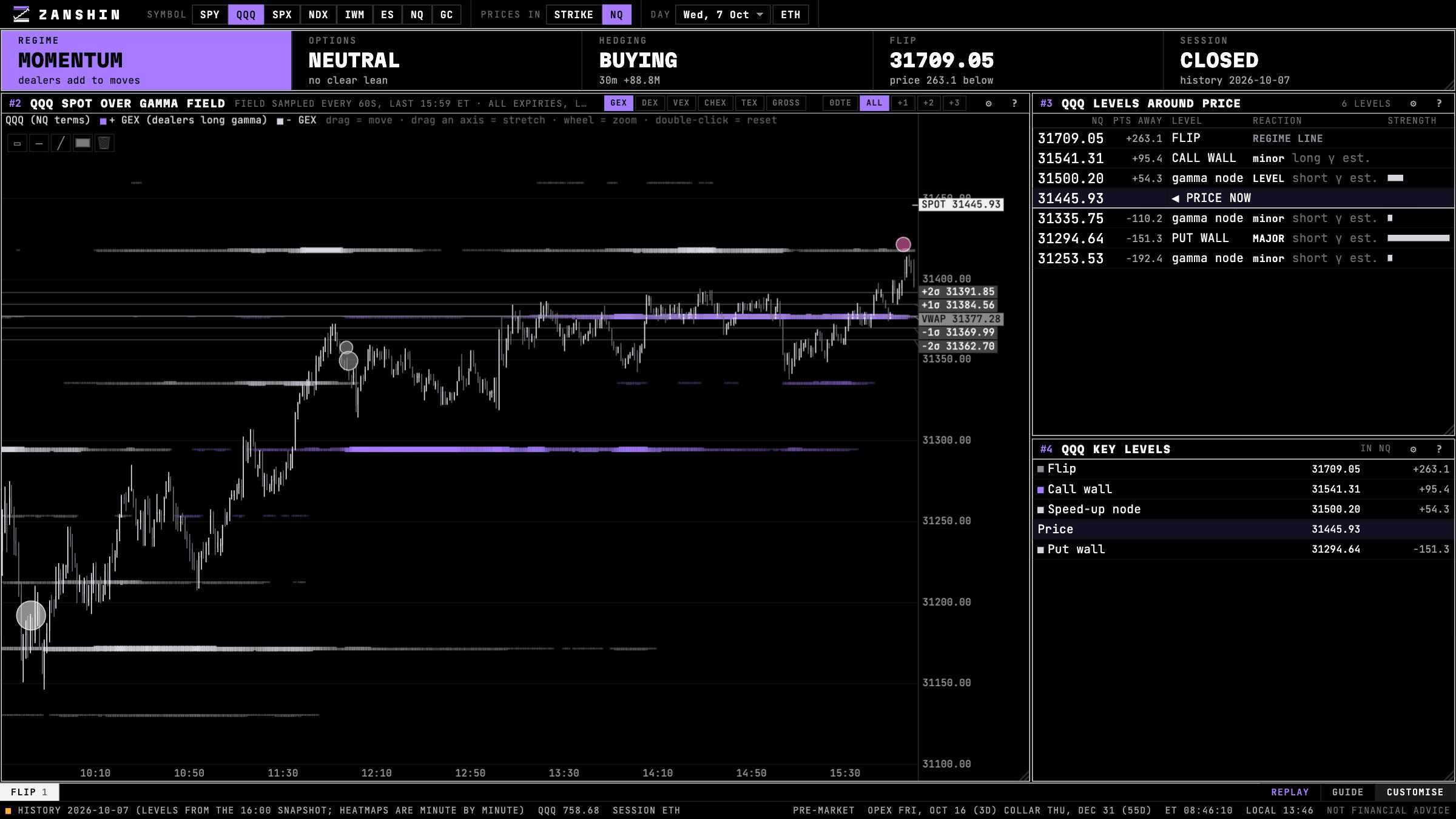
The gamma flip is the price at which the dealer gamma book, repriced at that price, sums to zero. Above it dealers are estimated long gamma; below it, short.
How it's computed
You can't read the flip off a per-strike chart. Gamma depends on spot, so the right way is to take every contract in the dealer book with its own strike, implied vol and time to expiry, reprice the whole book's gamma at a grid of hypothetical spot prices, and find where the total crosses zero. That's how Zanshin Flow does it, every minute.
Why traders watch it
Above the flip, dealer hedging leans against moves; below it, hedging chases them. Platforms call it the zero-gamma level, the volatility trigger or the high-vol level. It's the boundary between the two regimes described on the gamma exposure page.
What our archive says
We tested whether being below the flip forecasts the next 30 minutes' volatility, on seven sessions and seven symbols, trained on five days and checked on two unseen ones. On the unseen days, half hours below the flip were far more volatile; on the training days there was no difference. In neither sample did the regime add anything once the last 30 minutes' realised volatility was known. The flip is a good description of the market's state; we haven't found it to be a forecast.
The flip moves
It's a function of the whole book, so it moves as price, implied volatility, time and positions change. On busy 0DTE days it can follow price for long stretches.
Questions
What is the gamma flip?
Is the gamma flip the same as the volatility trigger?
Does price below the gamma flip mean volatility will rise?
Not financial advice. This article explains how options and dealer hedging work. It is not a recommendation to buy or sell anything.